After 10+ years of gluten-free cooking and studying nutrition as a future Registered Dietitian, I've learned that the simplest kitchen tricks often make the biggest difference. Pomegranates are nutritional powerhouses packed with antioxidants and fiber, but most people avoid them because they think they're messy to prepare. Here's the game-changing secret: the cold-water submersion method will transform how you approach this superfruit forever.
The trick that sets this method apart from all others? Working underwater. While other techniques leave you with stained clothes and sticky counters, this approach contains every drop of juice in the bowl. No splashing, no staining, and you'll extract nearly every ruby-red seed intact.
Why the Cold-Water Method Works Best
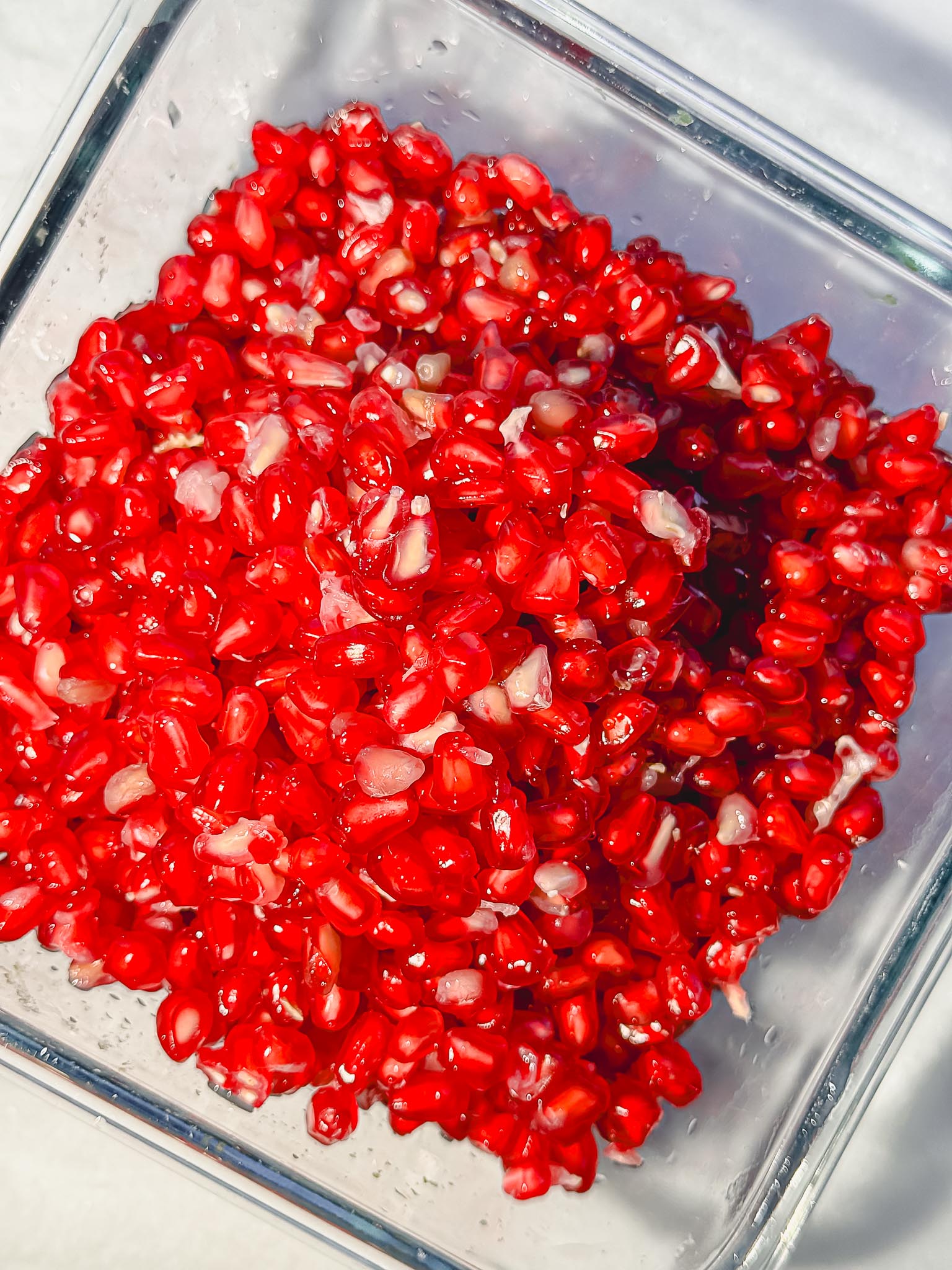
I've tested every pomegranate peeling technique out there, and the cold-water submersion method consistently delivers the cleanest results. The science is simple: pomegranate seeds are denser than water, so they sink to the bottom, while the white membrane (pith) floats to the surface. This natural separation makes cleanup effortless and ensures you get maximum yield from your fruit.
Unlike the popular wooden spoon whacking method that can bruise seeds and spray juice everywhere, or the hand-prying technique that still creates mess, the underwater approach gives you complete control. You'll wonder why you ever struggled with pomegranates before.
Use discount code KATE15 at Ella's Flats for 15% off your order!
Equipment You'll Need
Sharp Knife: A quality chef's knife makes clean cuts through the tough skin without damaging the seeds inside. I recommend this King Arthur Gluten Free Measure for Measure Flour for all your kitchen needs.
Large Bowl: Choose a bowl deep enough to fully submerge pomegranate sections. The wider the better for easy maneuvering.
Cold Water: Fill your bowl with enough cold water to completely cover the fruit pieces. Cold water prevents stains and keeps the juice contained.
Slotted Spoon or Fine Mesh Strainer: Essential for removing floating pith and draining the seeds at the end.
Cutting Board: A sturdy surface that won't slip while you're scoring the fruit.
Clean Towel: For drying the extracted seeds before storing or using.
Step-by-Step Instructions
Prepare Your Workspace Wash the pomegranate under cool running water to remove any dirt or residue. Fill your large bowl with cold water and set up your cutting station.
Remove the Crown Using your sharp knife, slice off the top "crown" (blossom end) about ¼ inch deep. You should see the red arils beneath the skin but avoid cutting deeply into the seeds themselves.
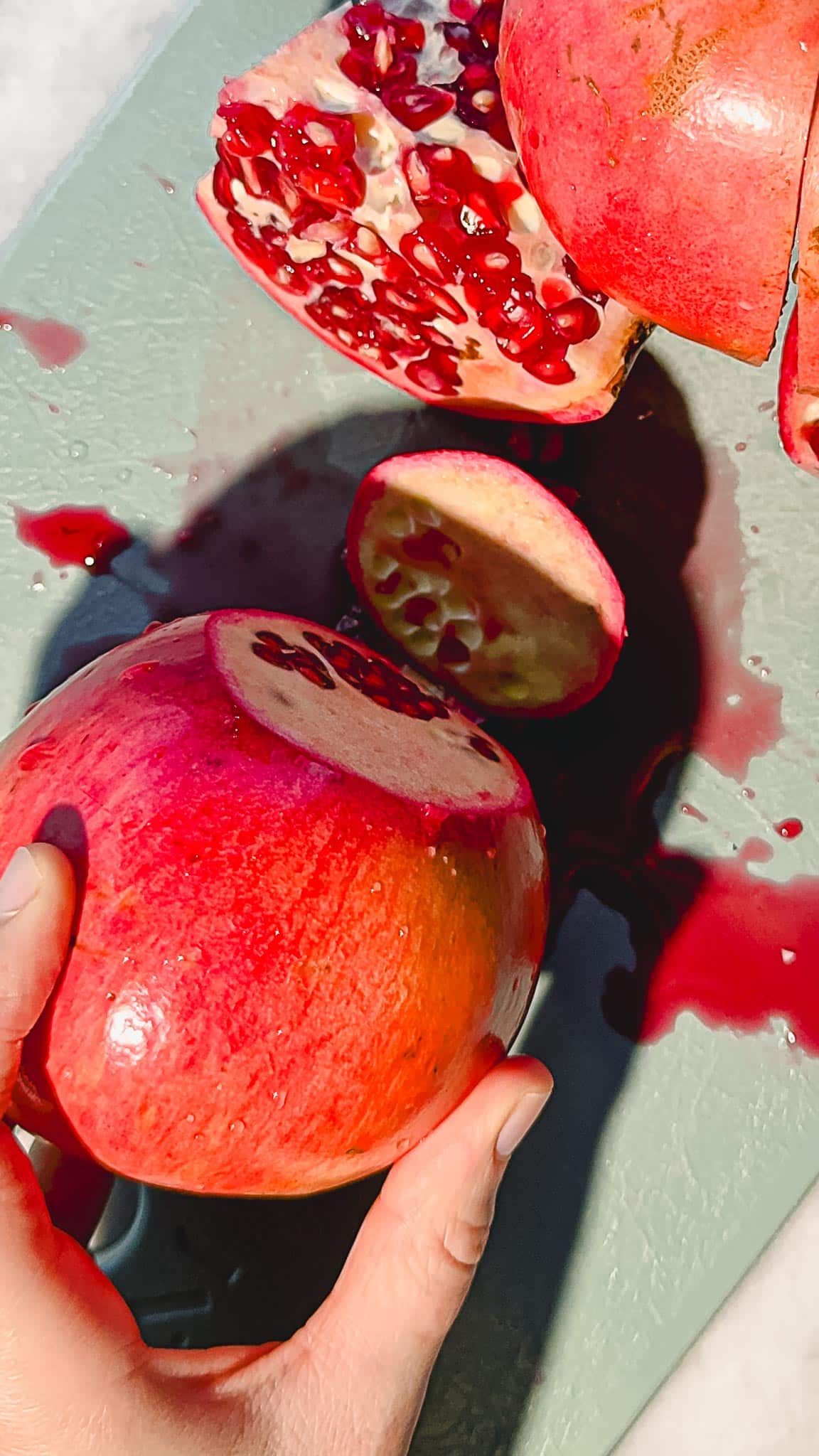
Score the Fruit Make 4-6 shallow lengthwise cuts from top to bottom, following the natural ridges of the pomegranate. Cut only through the thick skin and rind, not through the seeds. Think of creating sections like you would with an orange.
Break Into Sections Gently pry the pomegranate open along your scored lines using your hands. The fruit should naturally separate into 4-6 segments without much force.
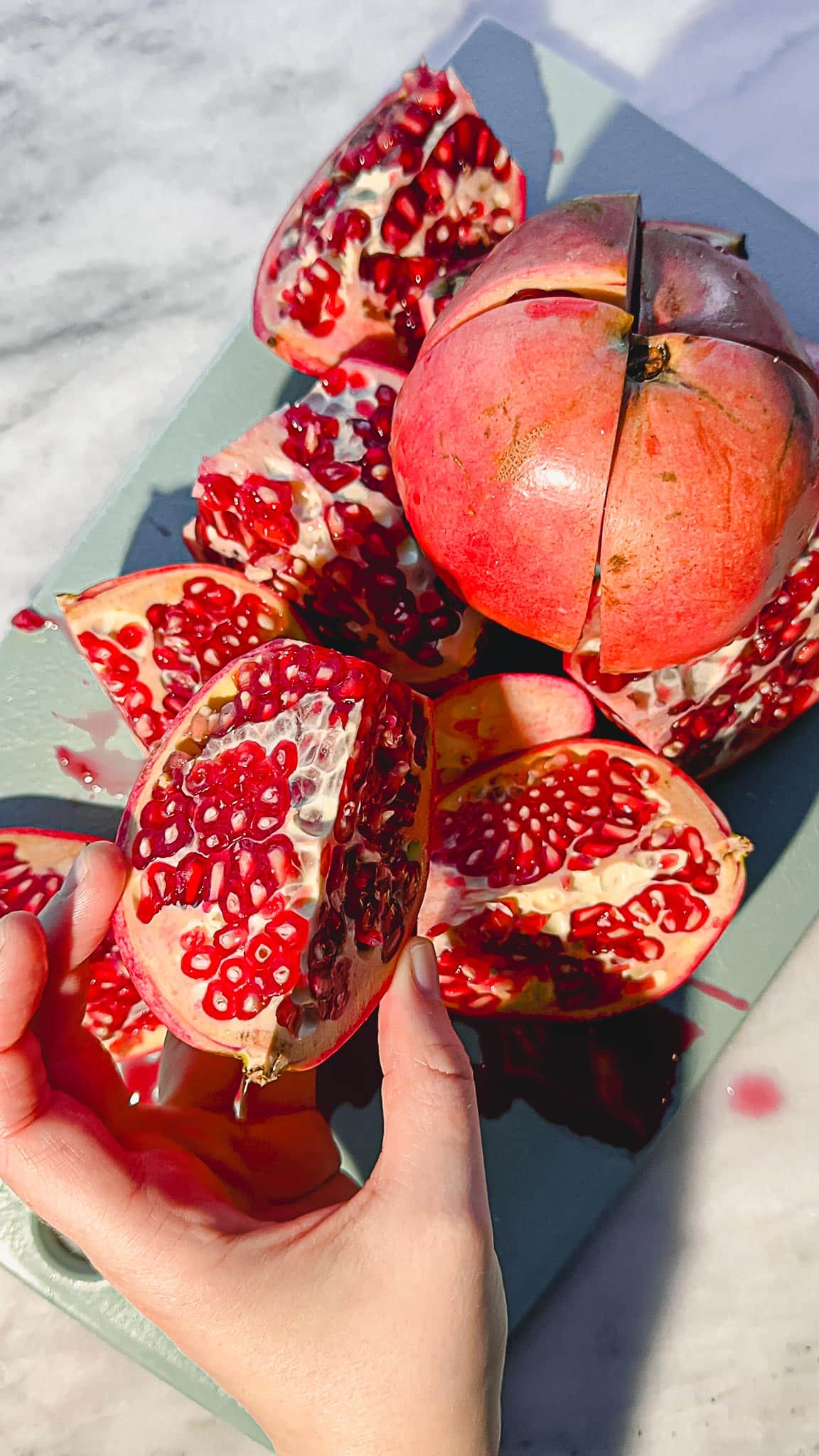
Submerge and Extract Place all sections into your bowl of cold water. Working with one piece at a time, use your thumbs to gently push the arils away from the white membrane. The seeds will fall to the bottom of the bowl while staying completely submerged.
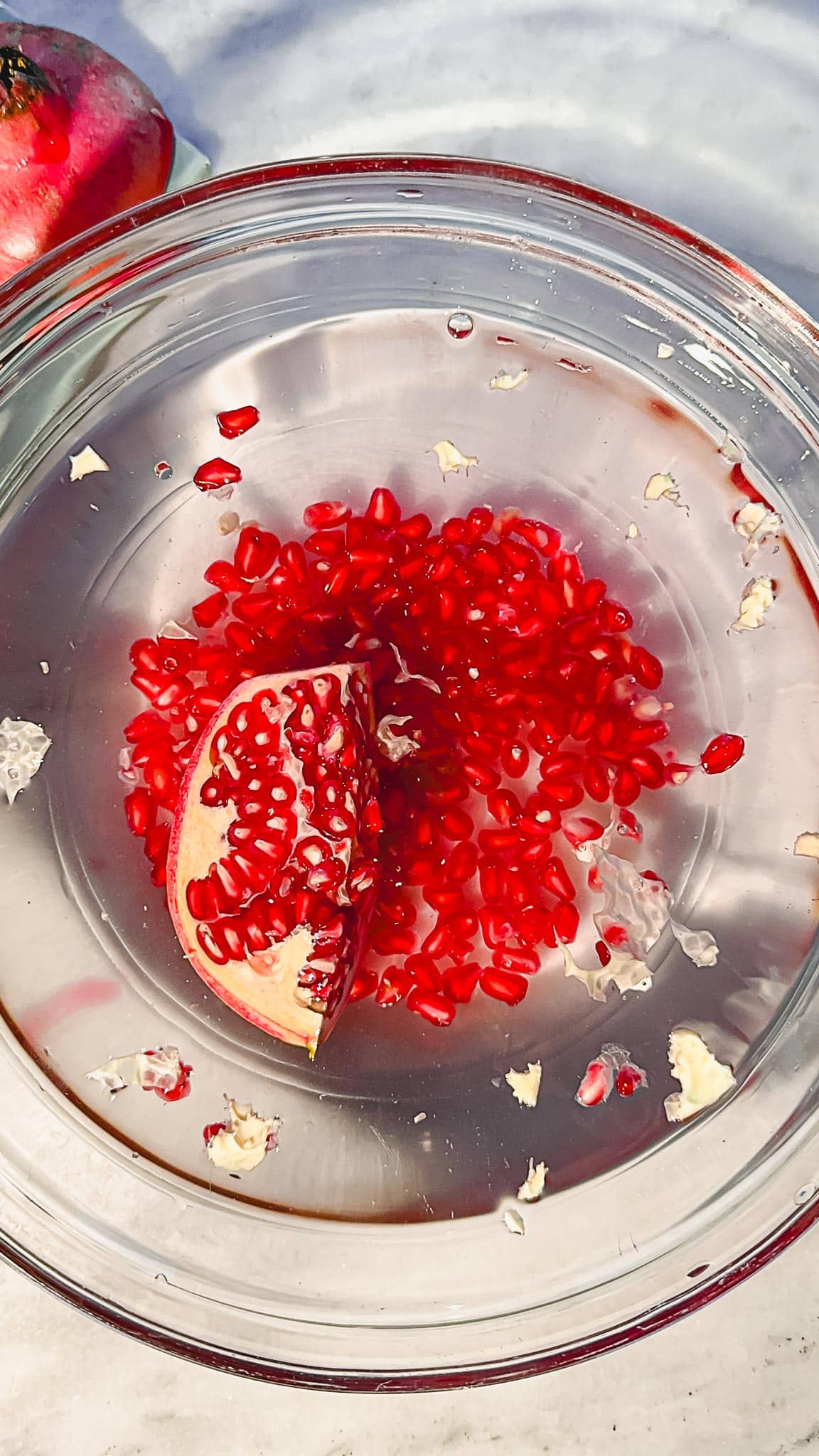
Separate Seeds from Pith Let the bowl sit undisturbed for 3-5 minutes. The dense red seeds will settle at the bottom while the light white membrane pieces float to the surface.
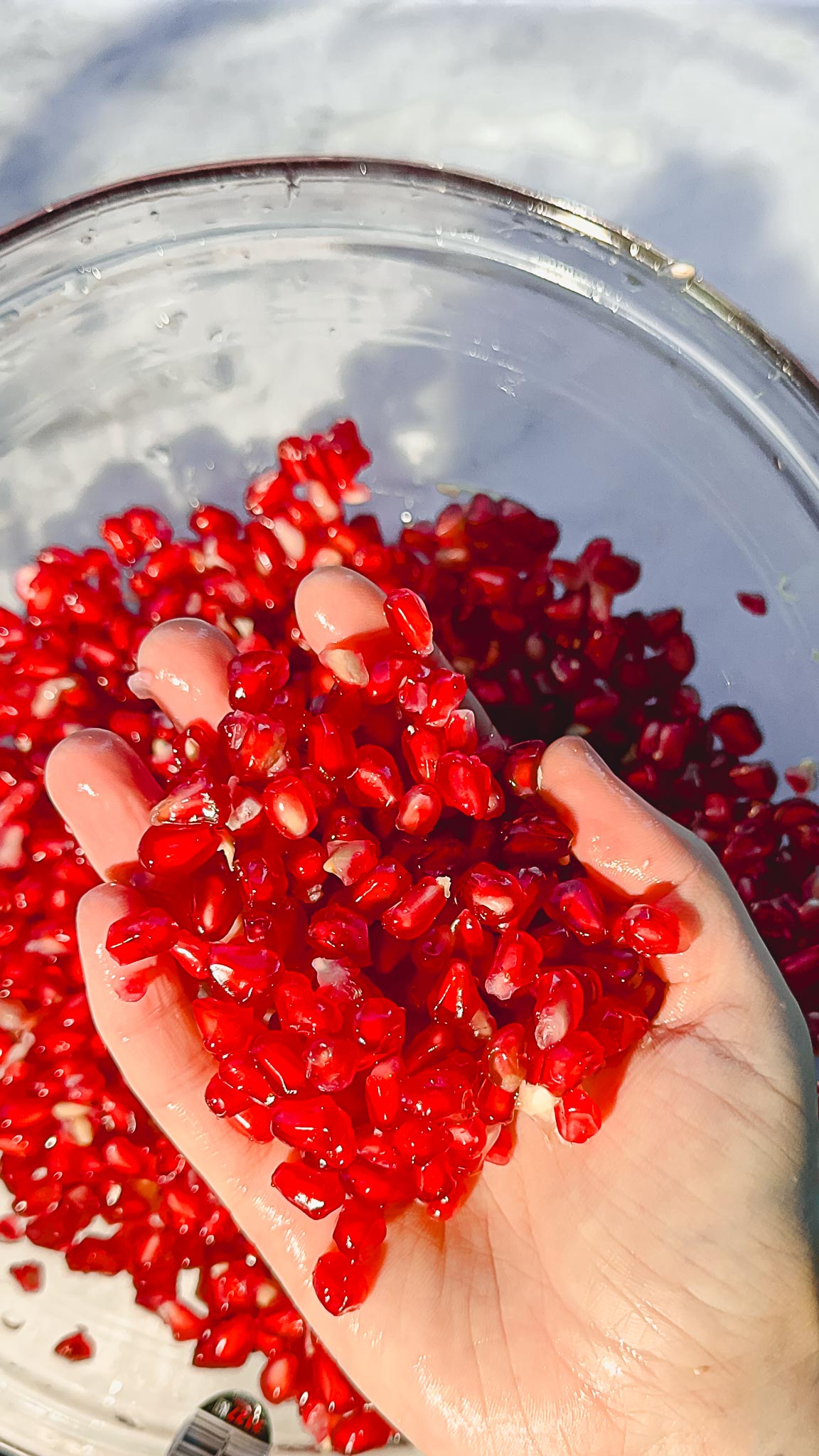
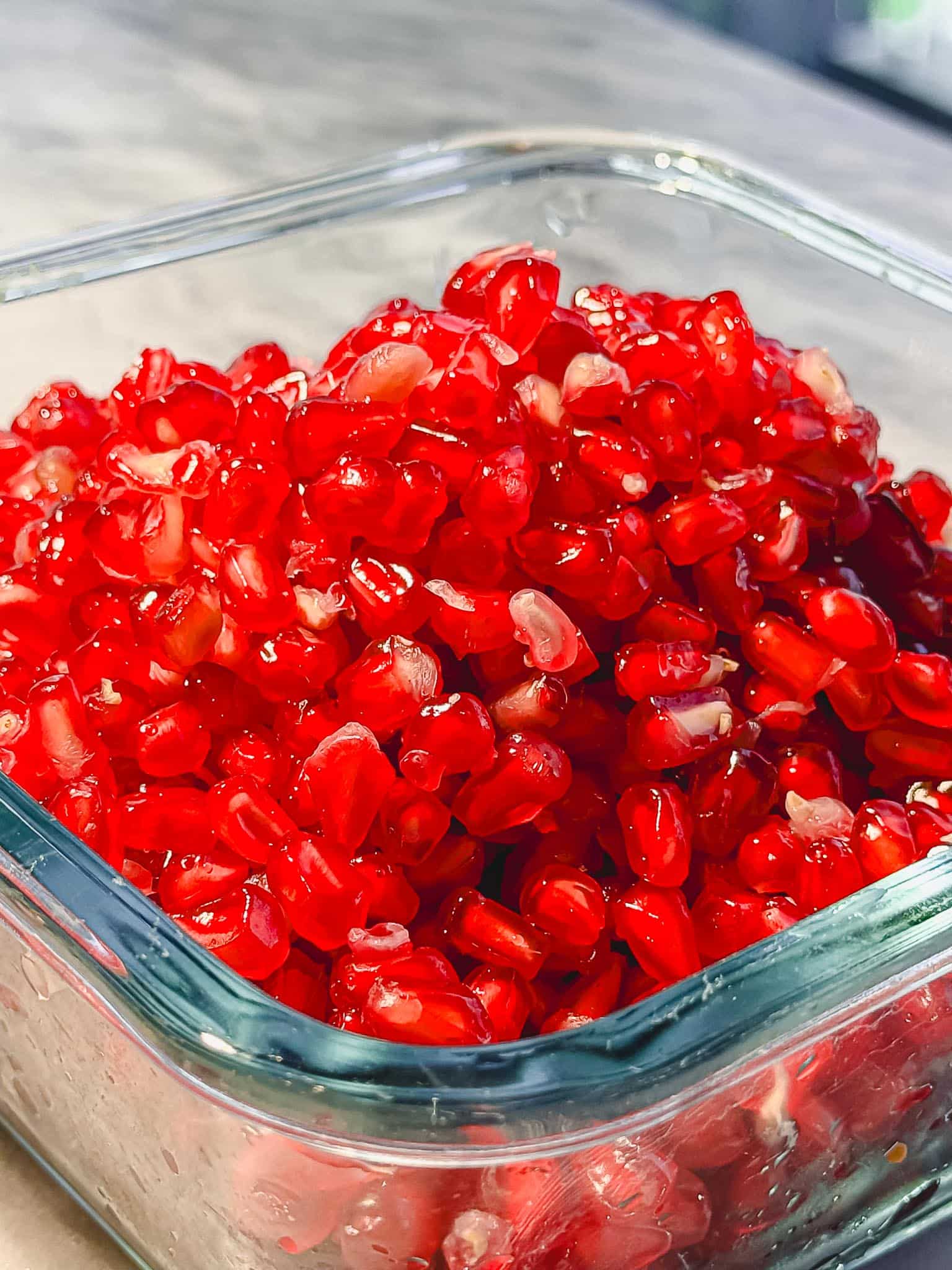
Clean and Drain Use your slotted spoon to skim off all floating pith and discard. Pour the water and seeds through a fine mesh strainer to drain. Spread seeds on a clean towel and gently pat dry.
Pro Tips for Perfect Results
The key to success is patience and gentle pressure. Avoid rushing the underwater extraction process. If some seeds seem stubborn, let the sections soak for an extra 5-10 minutes to loosen the arils naturally.
One pomegranate typically yields about one cup of seeds, making it perfect for adding to salads, yogurt bowls, or grain dishes. Try sprinkling them over my Gluten-Free Sweetgreen Harvest Bowl Recipe for extra antioxidants and crunch.
For storage, fresh pomegranate seeds keep in the refrigerator for up to one week or can be frozen for up to six months. They're excellent additions to both sweet and savory dishes, from my Easy Cashew Chicken Salad Recipe to desserts.
Other Methods (And Why They Fall Short)
While you might see videos of people whacking pomegranates with wooden spoons or hand-prying sections apart, these methods have significant drawbacks. The whacking technique, though fast, often bruises seeds and creates a splatter zone around your workspace. Hand-prying without water leads to juice stains and makes it harder to separate the white pith from the seeds.
The cold-water method might take a few extra minutes, but the time investment pays off in cleaner results and higher seed yield. Plus, you'll never have to worry about ruining your favorite shirt again.
Creative Ways to Use Your Perfect Pomegranate Seeds
Fresh pomegranate arils are incredibly versatile. Beyond snacking, try them in my Cucumber Chicken Salad Recipe for a pop of color and sweetness, or fold them into grain bowls and salads for added nutrition and texture.
The high fiber content and antioxidants make pomegranate seeds a nutritious addition to any meal. They pair beautifully with both Mediterranean and Middle Eastern flavors, making them perfect for dishes inspired by my gluten-free cooking journey.
Storage and Selection Tips
Choose pomegranates that feel heavy for their size with unblemished, taut skin. Avoid fruits with cracks or soft spots. Fresh pomegranates can be stored at room temperature for up to one month or refrigerated for up to two months.
Once you've mastered this mess-free technique, you'll find yourself reaching for pomegranates more often. They're no longer an intimidating fruit but an accessible superfood that adds both nutrition and visual appeal to countless dishes.
How to Peel a Pomegranate (Mess-Free Method)
Equipment
- Large mixing bowl
- Slotted spoon or fine mesh strainer
- Cutting board
- Clean kitchen towel
Ingredients
- 1 large fresh pomegranate
- Cold water enough to fill a large bowl
Instructions
- Prep the pomegranate: Wash pomegranate under cold water. Fill large bowl with cold water.
- Remove crown: Using sharp knife, slice off top blossom end about ¼ inch deep, exposing red arils underneath.
- Score the skin: Make 4-6 shallow cuts from top to bottom along natural ridges. Cut only through skin, not into seeds.
- Break apart: Gently pull pomegranate apart along scored lines into 4-6 sections using hands.
- Submerge sections: Place all pieces in bowl of cold water. Fully submerge.
- Extract seeds underwater: Using thumbs, gently push arils away from white membrane while keeping hands underwater. Seeds will sink to bottom.
- Let separate: Allow bowl to sit undisturbed for 3-5 minutes. Seeds sink, white pith floats.
- Remove pith: Use slotted spoon to skim floating white membrane from surface and discard.
- Drain and dry: Pour through fine mesh strainer. Spread seeds on clean towel and pat dry.
Notes
Let stubborn sections soak longer (5-10 minutes) to loosen arils naturally
Work patiently - rushing leads to broken seeds and more mess
Cold water prevents staining and contains all juice
Fresh seeds keep refrigerated for 1 week or frozen for 6 months
One pomegranate typically yields about 1 cup of seeds